
Cataract is one of the most common eye conditions that develops gradually over time, especially with aging. Many people do not notice the early warning signs until their vision becomes seriously affected. However, recognizing the early signs of cataract can help you take timely action and protect your eyesight.
In this article, we will discuss the early symptoms of cataract, how they affect your vision, and why it is important not to ignore them.
Table of Contents
What Happens in the Early Stage of Cataract?
In the early stages, cataract begins as a slight clouding of the natural lens inside the eye. This cloudiness is usually mild and may not cause major vision problems at first.
Because the changes happen slowly, many people think their vision issues are just due to aging or fatigue. However, these small changes are often the first signs of cataract development.
Why Early Detection is Important
Identifying cataract early can help you:
- Understand changes in your vision
- Avoid worsening of eyesight
- Maintain daily activities without difficulty
- Seek professional guidance at the right time
Ignoring early signs can lead to more serious vision problems later on.
Early Signs of Cataract
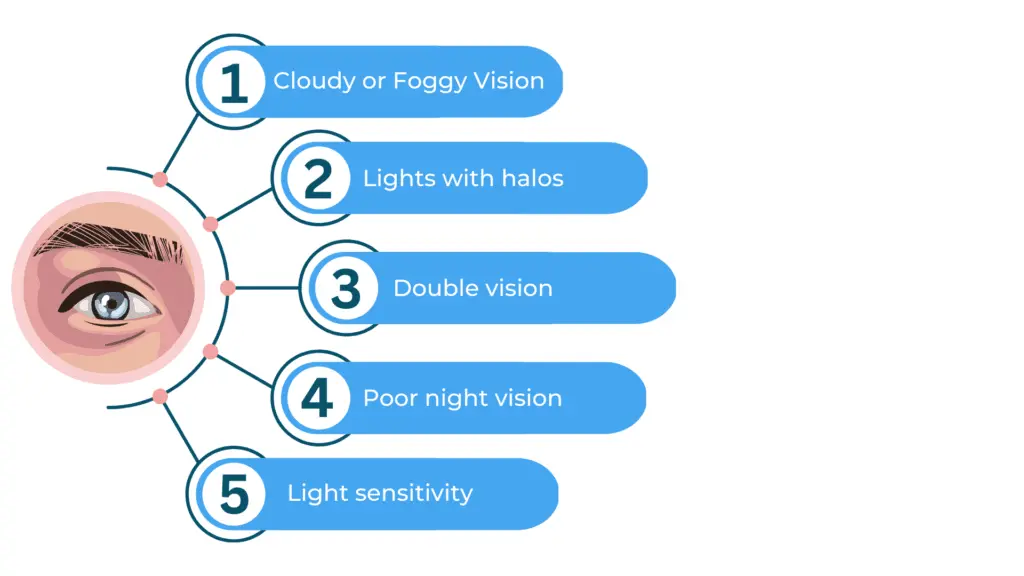
Below are the most common early symptoms of cataract that you should never ignore:
🔹 1. Blurred or Cloudy Vision
One of the first and most noticeable signs is blurred vision. Objects may appear hazy or less sharp, even when wearing glasses.
You may feel like you are looking through a foggy window or a thin layer of smoke.
🔹 2. Increased Sensitivity to Light
People with early cataract often become sensitive to bright light. Sunlight or strong indoor lighting may cause discomfort or irritation.
You may find yourself squinting more often or avoiding bright environments.
🔹 3. Difficulty Seeing at Night
Night vision becomes weaker in the early stages of cataract. Driving at night may become difficult due to reduced clarity and glare from headlights.
This is an important sign that should not be ignored.
🔹 4. Glare and Halos Around Lights
Another early symptom is seeing halos or glare around lights, especially at night.
Streetlights, car headlights, or bulbs may appear surrounded by a bright ring, making it harder to focus.
🔹 5. Faded or Dull Colors
Colors may start to look less vibrant or slightly yellowish. You may notice that things do not appear as bright or colorful as before.
This happens because the cloudy lens affects how light enters the eye.
🔹 6. Frequent Changes in Eyeglass Prescription
If you find yourself needing new glasses again and again, it could be an early sign of cataract.
Your vision may seem to improve temporarily with new glasses but then worsen again after some time.
🔹 7. Double Vision in One Eye
Some people experience double vision (seeing two images of the same object) in one eye.
This is caused by irregularities in the lens due to early cataract formation.
🔹 8. Difficulty Reading Small Text
Reading books, mobile screens, or newspapers may become more difficult, especially in low light.
You may need brighter light or hold things closer to your eyes.
🔹 9. Eye Strain and Headaches
Constant effort to focus clearly can lead to eye strain, discomfort, and even headaches.
This is often overlooked but can be an early warning sign.
Commonly Ignored Signs
Many people ignore early cataract symptoms thinking:
- “It’s just age-related vision change”
- “My glasses need an update”
- “It’s due to tiredness”
However, these assumptions can delay proper diagnosis.
When Should You Be Concerned?
You should pay attention if:
- Your vision is gradually getting worse
- You face difficulty in daily tasks
- Light causes discomfort
- Night vision is becoming poor
These are clear indicators that your eyes need professional attention.
Who is More Likely to Notice Early Signs?
Early signs are more common in:
- People above 40 years
- Individuals with frequent screen use
- Those exposed to bright sunlight regularly
- People with certain health conditions
Being aware of these risks helps in early recognition.
How Cataract Progresses if Ignored
If early symptoms are ignored, cataract can slowly progress and cause:
- Severe vision loss
- Increased difficulty in daily life
- Dependence on others
- Reduced quality of life
That is why early awareness is extremely important.
You can learn more about diagnosis and treatment options here:
https://drsohailvisioncare.com/services/cataract-surgery-in-bahawalpur/
Conclusion
Cataract does not appear suddenly—it develops gradually with subtle warning signs. Blurred vision, light sensitivity, night vision problems, and frequent changes in glasses are all early indicators that should not be ignored.
Recognizing these signs early can help you protect your vision and take timely steps for better eye health.
Your vision is precious—small changes can be big signals.
Asst Dr. Sohail Arshad Ch